

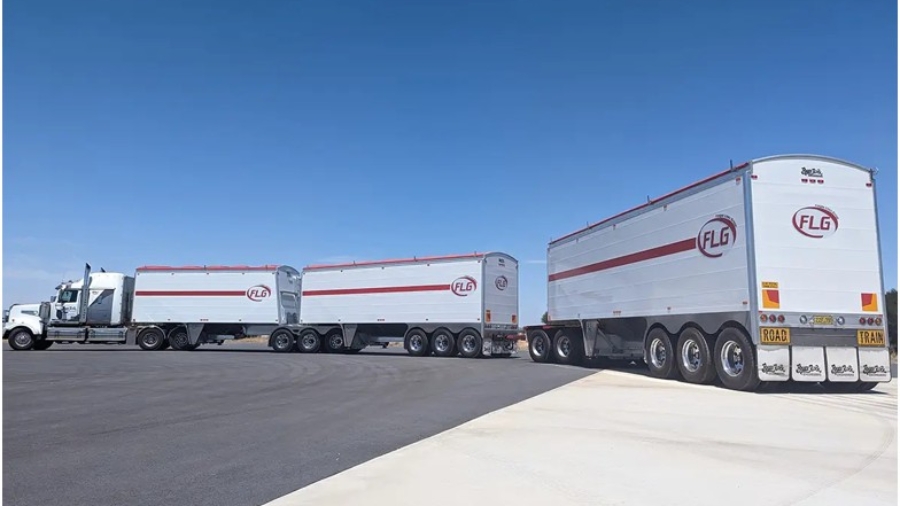
When moving bulk materials on construction, roadwork, mining, or infrastructure projects, choosing the right trailer configuration can have a direct impact on productivity, operating costs, and project timelines. Among the most efficient options available, belly dump trailers have become a preferred choice for contractors who need fast, controlled material placement over long distances.
But before investing in a belly dump trailer, it’s important to understand exactly how it works, where it delivers the greatest advantages, and where its limitations may affect your operation. While these trailers are widely used across the earthmoving and aggregate industries, they are not the ideal solution for every job site or material type.
This guide explains what a belly dump trailer is, how the unloading system functions, the industries and applications where it excels, and the key considerations buyers should evaluate before making a purchasing decision. Whether you’re comparing hauling equipment for an upcoming project or researching fleet expansion options, this overview will help you determine if a belly dumpers trailer is the right fit for your business.
Table of Contents
The Mechanics Behind the Discharge
A belly dump trailer discharges material through a central gate running along the underside of the trailer body, rather than elevating the load from the rear or side. The gate opens downward, allowing material to drop in a controlled stream directly beneath the trailer as it moves forward. This mechanism suits free-flowing materials including grain, fertiliser, aggregates, and road base, where a clean, even spread or a precise pile is operationally important.
The structural integrity of the gate assembly is critical under load. BRE’s belly dumpers use a tongue-and-groove joint construction, supported internally and externally, which maintains gate alignment and prevents material leaking through the joint during transit. Compared to a rear tipper, which raises the body to discharge from a fixed point, or a side tipper, which rotates the load laterally, the belly dump keeps the trailer level throughout the discharge process. Trap doors are operated via remote control, which reduces the need for the operator to leave the cab and shortens the time spent at each discharge point.
The Applications Where They Earn Their Keep
Belly dump trailers are most productive in high-cycle bulk haulage where discharge speed and cleanout quality directly affect throughput. At grain receival facilities, the ability to discharge smoothly and leave minimal residue in the trailer body reduces turnaround time and the risk of cross-contamination between loads. The same cleanout advantage applies to fertiliser, where material build-up in a conventional tipper body is a recurring operational problem.
For aggregates and road base, the continuous-pour discharge method suits spreading applications where material needs to be laid evenly along a corridor rather than dumped at a single point. In an A-double configuration, belly dump combinations regularly achieve payloads well above 60 tonnes where PBS approvals and road conditions allow, which improves the cost-per-tonne figure on longer hauls. The absence of a tipping action also removes overhead height risk at receival sites, a relevant safety consideration when operating under low structures or overhead conveyors. Belly dumps are not universally superior to other configurations, but in the right operational context, they reduce cycle times, improve site safety, and carry more per run.
Why Strength-to-Weight Ratio Is the Number That Actually Matters
Strength-to-weight ratio determines how much structural capacity a trailer delivers relative to its own tare weight. A trailer built from high-strength steel can carry the same load as a heavier conventional build while weighing less, which translates directly into additional legal payload per trip. Over the course of a contract term, those incremental gains per run accumulate into a material difference in revenue.
Premium steels such as Hardox® and Strenx® are used in quality belly dump construction specifically because they deliver high tensile and wear resistance without requiring thicker, heavier plate. This keeps tare weight down without compromising the structural performance needed for sustained high-cycle haulage. From a compliance standpoint, a lower tare weight gives operators more headroom under NHVR mass limits, reducing the risk of unintentional overloading on variable material densities. When evaluating specifications, the figure that matters is the actual tare weight for the intended configuration, not a headline number from a brochure that may reflect a stripped-down base build.
The Honest Part: When a Belly Dump Isn’t the Right Call
Belly dump trailers are designed for free-flowing materials. Wet or sticky loads such as clay, certain mineral sands, or damp grain can adhere to the trailer body and fail to discharge cleanly through the gate, creating manual cleanout requirements that eliminate the cycle-time advantage. Operators running mixed loads across variable material types need to account for this limitation before committing to the configuration.
Site conditions also affect suitability. Because discharge happens downward through the belly, the ground surface beneath the trailer needs to be stable and reasonably level. Soft or uneven ground can create operational problems that don’t arise with a rear tipper or side tipper. For operators running a small mixed fleet across multiple job types, a tipper combination may offer more flexibility across varied site requirements. A belly dump is a high-performance tool in the right context, but that context needs to be confirmed against actual operational conditions, not assumed.
The Questions Worth Raising Before You Sign Anything
A prepared buyer enters a dealer conversation with specific questions rather than general interest. The first is tare weight: not the headline figure, but the confirmed tare for the exact configuration, covering axle group, body length, and gate assembly, as intended for the operator’s routes and mass management scheme. The second is material compatibility: which loads has the trailer been run with, and what are the manufacturer’s stated discharge limitations for materials outside the standard range.
Maintenance requirements and wear points are the third area to address. Gate seals, the tongue-and-groove joint, and the trap door mechanism are the components that see the most operational stress, and understanding the service intervals and replacement costs upfront allows for accurate operating cost projections. Compliance with NHVR requirements for the intended configuration should be confirmed in writing before purchase. Finally, after-sales support and regional servicing availability matters particularly for operators based outside metropolitan centres, as a trailer without accessible support is a liability on a long-term contract.
